Field notes
Rehearsal, out loud.
Scripts and methods for the conversations most people avoid — job interviews, raise asks, hard talks, speeches, negotiations. Written to be used, not admired.

Responding to a PIP Meeting: Employee Checklist
A Performance Improvement Plan (PIP) meeting requires four preparation steps: write a non-conceding opening, map accurate criticism against disputed facts, list dependencies, and confirm the process. Leave with a usable script for pressure: “I acknowledge receipt, but I need reasonable time to review the document before signing or responding in detail.” Ask for four measurable details: the outcome, data source, evaluator and check-in schedule. Use a one-page dependency list to record approvals, training, unavailable data and each owner. When a fact is wrong, correct one date or record rather…

Asking for a Pay Rise During a Pay Freeze: Scripts That Work
A pay freeze doesn't have to mean walking away empty-handed, but it does mean changing what you're asking for. This piece breaks down exactly what to say when your manager cites a frozen budget, starting with a two-part line that accepts the freeze while pushing for a named approver and a written review date. It covers the exception process most freezes quietly carry (federal law enforcement still saw 3.8% raises under a "governmentwide" freeze), a cash-equivalent menu ranking banding reviews above bonuses and leave, and the four things a deferred-raise agreement must specify in writing…

How to Handle a Counter Offer Conversation: Exact Scripts
A counter-offer conversation should start with a pause, not a promise: “Thank you for putting this forward. Please send the full terms in writing, and I’ll respond after I’ve reviewed them.” Use a second question to test whether the offer solves the real problem: “What problem do you believe this offer solves?” Ask for salary, effective date, title, scope, reporting line, development plan, flexibility, benefits, equity and bonus terms. Replace vague promises such as “next cycle” with a month, decision-maker and written commitment. Score money, growth, manager, workload and flexibility from…
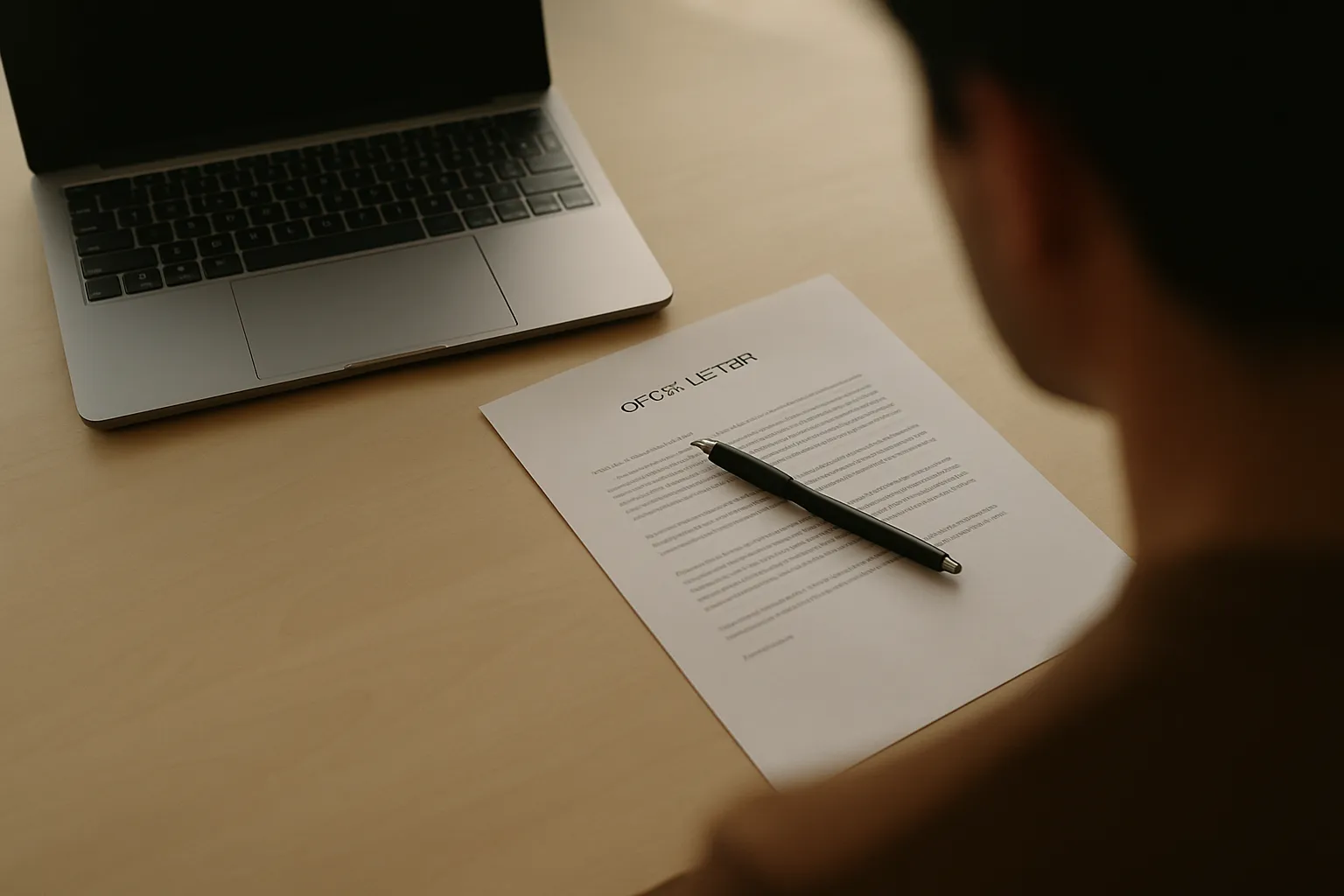
How to Handle a Counter Offer Conversation: Exact Scripts
A salary counteroffer conversation needs a calm boundary before you discuss money: “Thank you for putting this forward. I’m willing to consider it, but I won’t decide in this meeting.” Request the complete proposal in writing, including salary, effective date, bonus terms, title, reporting line, workload and working arrangements. Use a 24-hour review period when practical, and keep your original notice position unchanged while you assess the offer. Compare confirmed terms with the role you accepted, marking each item written, approved, dated or verbal. A higher salary does not fix unclear…

Practising Interview Follow-Up Questions After STAR Answers
STAR answers need follow-up practice, not more memorisation. Rehearse one resume story aloud, then answer three probes in order: “What was your specific contribution?”, “Why did you choose that approach?” and “What happened next?” Keep the opening response to 1.5–2 minutes, answer each probe briefly, and do not switch stories until you can show ownership, reasoning and evidence. Use CAR when pressure makes STAR cumbersome, or CARL when the lesson matters most. Practise competency-specific branches for conflict, failure, leadership and prioritisation, then test missing details with questions…

Nurse Interview Questions: What Good Answers Sound Like
Nurse interview questions test whether you recognise risk, act within scope, and communicate accountability when priorities compete. Strong answers follow one decision rule: name the highest risk, state your safe action, then explain who you would contact, how you would close the loop, and what you would document or reassess. Use ABCDE for immediate assessment and SBAR for escalation, but connect each framework to your role, local policy, supervision, and competency limits. Behavioural answers work best with STAR, keeping the Action section longest and protecting patient confidentiality…
Software Engineer Interview Questions: Good Answers
Software engineer interview questions test more than algorithm recall: they reveal how you frame problems, check assumptions, explain trade-offs, test solutions and recover when conditions change. Prepare for 4–6 possible stages, from a 15–30-minute recruiter screen to technical interviews, loops and team discussions, because each format requires different evidence. Use eight signals to guide every answer: problem framing, correctness, complexity, testing, ownership, trade-offs, communication and recovery. For coding prompts, restate the task, clarify inputs and constraints, give a simple…

How Many Mock Interviews Before an Interview? A Practical Plan
Mock interviews work best when you match practice to the formats and failure points in the real process. Aim for 3–5 serious mocks, then replace full simulations with targeted drills for the weakness that still appears. A recruiter screen may need three focused sessions, while a technical loop may require 5–10 mocks across coding, system design and behavioural questions. Record answers, test unfamiliar follow-ups and keep an error journal that names the weak line and next correction. Stop adding full mocks after three consecutive sessions show steady performance, natural delivery and no…

Civil Service Interview Practice Out Loud: UK STAR Plan
Civil Service interview practice works best when it follows the vacancy rather than a generic question bank. Mark each Success Profiles element as assessed, possibly assessed or not listed, then rehearse behaviours with STAR while answering strengths, technical and ability questions directly. Record one unscripted response and repair three points: did you answer the question, show your own action and name a concrete result? Use around two minutes as a private editing ceiling for a standard behaviour answer, not an official rule. Score recordings with a private 1–7 scale, where 4 means thin…

Presentation Interview Task Practice: A 48-Hour Plan
Presentation interview task practice needs a decision-first plan when the brief arrives 48 hours before. Decode the assessment signal, choose one recommendation, and build a short deck with an opening, two evidence-led points, a conclusion, and an appendix. For a 10-minute task, rehearse a two-minute opening, two three-minute body sections, and a two-minute close, then cut material if the run exceeds the slot by 90 seconds. Complete two full spoken runs, five interruption drills, and one 15-minute question sequence; use the script, “The decision is X, my recommendation is Y, because Z, with…

How to Not Sound Rehearsed in an Interview
Interview answers sound natural when the facts stay fixed while the route, opening and emphasis change. Build a factual spine around what happened, what you did, what changed and why it fits the role, then practise one cold response, one focused correction and one altered follow-up. Listen for a flat opening, fixed word order, no recovery after interruption and background that pushes the answer beyond 110 seconds. Keep names, dates, ownership and results accurate, but vary the first line with prompts such as “The short answer is” or “A useful example is.” If a memorised sentence disappears…

Negotiating Without a Competing Offer: A Practical Guide
Negotiating without a competing offer works best when you replace rival-offer leverage with a clear scope, market and switching-cost case. Ask where the offer sits in the approved range before naming a figure, then make one evidence-based counter tied to a specific responsibility or result. Bring data from at least two compensation sources, adjust for level, location and total package, and separate uncertain equity from cash. Use this script: “I’m keen to join. Based on the role’s scope and the market data I reviewed, could we move the base to amount? If base is fixed, I’d like to discuss…

DPIA for Voice AI Roleplay: University Checklist
A university careers service should approve voice-AI roleplay only after completing a Data Protection Impact Assessment (DPIA) when processing meets two or more high-risk criteria, such as evaluation, innovative technology, sensitive data, vulnerable students or access to opportunities. The approval record should map recording, transcription, model processing, scoring, feedback, retention, hosting and deletion, then assign each operation a controller or processor role, lawful-basis analysis and accountable owner. Keep the pilot formative: prohibit scores and transcripts from progression…

How Many Times to Rehearse a Wedding Speech: A Four-Week Plan
Wedding speech rehearsal works best with six purposeful full runs, not endless repeats of the same performance. Follow a four-week plan that moves from script editing to timed delivery, cue-card practice, live feedback and a final dress rehearsal. Use five to seven complete out-loud runs as the target, or three when the wedding is close. Time your speech at roughly 120–140 words per minute, then include pauses, laughter and applause in the real slot. Shift from a full script to keyword cards, memorising the opening, transitions and final toast rather than every sentence. Practise recovery…

How to Rehearse for Handling Hostile Q&A
Wharton Communication Program distinguishes informational, speculative and challenging questions, giving presenters a practical starting point for hostile Q&A rehearsal. Practise six hostile question types, including ambush statistics, loaded premises, personal accusations and repeated interruptions, then respond with three moves: holding line, bridge and exit. A 20-minute drill builds recovery under pressure by adding one variation at a time, such as a false premise or interruption, rather than rehearsing theatrical abuse. Score eight observable behaviours, including hearing the full…
Measure Interview Readiness Across a Cohort That Counts
A careers service can prove interview-practice progress by comparing matched learners on the same scenario before and after practice. Score confidence, persuasiveness, clarity, engagement and pacing on a 1–5 rubric, then use median change as the primary cohort measure, supported by mean change, improvement rate, target-band attainment and completion rate. The practical decision rule is clear: report “no reliable improvement detected” when sessions are unmatched, transcripts or dimension scores are invalid, the modality or agenda changes, or the pre-registered participation gate fails. A…
Flexible Working Request Conversation: Rehearse the Meeting
A statutory flexible-working request conversation works best when you connect your proposed pattern to coverage, deadlines and measurable service needs. Rehearse a short opening that states the request, the work it protects and the decision you want: approval, a defined alternative or a fair trial. Prepare answers for all eight statutory refusal grounds, with named owners, handover points, escalation routes and evidence such as response times or missed deadlines. Use the script, “Which specific operational risk should we address, and what evidence would show it is resolved?” Propose a trial…
Going Blank in an Interview: Rehearse Your Recovery
Interview recovery starts with four rehearsed lines: pause, clarify, paraphrase, then choose one evidence anchor. “Give me two seconds to think about that” creates 2–3 seconds, while a focused clarification can create 5–10 seconds to identify whether the interviewer wants the process, outcome or both. Learn to distinguish Blank-Out, Scramble and Spiral, then match the response to the problem instead of forcing a memorised paragraph. Use flexible STAR prompts, such as “deadline, handover, recovery,” and give a 30–60-second example led by its headline. If no relevant evidence returns, say, “I…
Explain Being Made Redundant in an Interview Clearly
Redundancy should be explained with a short, factual script that protects your credibility and moves the interview towards your next contribution. Open with, “My role was made redundant as part of a wider restructure,” then add one verified business fact and one relevant result or readiness signal. Aim for about 22 seconds: state the event in the first 4 seconds, give context by 12 seconds, and finish with your fit for the role. Use “mutual agreement” or “dismissal” only when those terms accurately describe your employment records. If performance contributed, address it directly with a…

UK Managers: 3 Layoff Conversation Scripts to Read Aloud
Practical UK aware layoff conversation scripts managers can use verbatim. Includes a pre meeting checklist, legal obligations, and a three session...

Rehearse Tough Lines Before Your Performance Review Meeting
Run 60–90 minute reviews that change behavior. Rehearse key lines, use scripts, set two to three SMART goals, and follow up for real progress.

12 Copy Ready Sales Roleplay Scenarios and a Manager Scorecard
Get 12 copy ready sales roleplay scenarios, a manager scorecard you can use this week, and a practical checklist for choosing AI practice tools to...

Get the Raise: Salary Negotiation Script with Three AI Rehearsals
Say your number once, back it with one proof point, then stop. Rehearse in three 10 minute AI sessions and turn offers into higher pay.